Bringing the Internet Home: Understanding Home Networks
The digital age has not only transformed how we interact with the world at large but also how our devices communicate within the confines of our homes. Central to this transformation is the home network—a collection of interconnected devices that share data and resources.
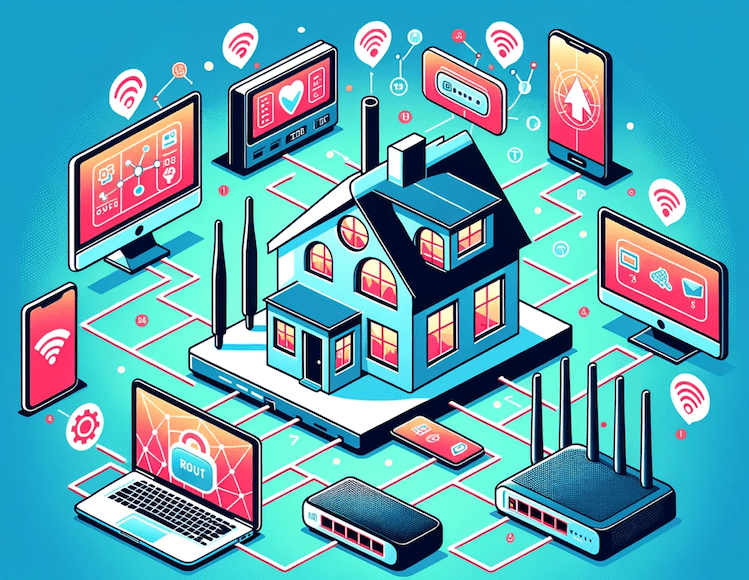
The Home Network
A home network is essentially a private cluster of devices that communicate with each other. This includes computers, smartphones, smart TVs, gaming consoles, and even IoT devices like smart thermostats or refrigerators. A home network facilitates data transfer and resource sharing among these devices, enhancing the overall user experience.
The Role of the Router
At the heart of a home network is the router. Acting as the central hub, it ensures seamless communication between devices. More than just a traffic director, the router also plays a pivotal role in network security. With built-in firewalls and encryption protocols, modern routers provide a robust first line of defense against potential cyber threats.
The Gateway: The Modem
While the router manages internal communication, the modem acts as the gateway to the broader internet. Internet service providers, like KPN or Ziggo, transmit data to homes, which the modem decodes and relays to the router. Without a modem, a home network would be isolated, devoid of internet connectivity.
The Integrated Modem-Router
To simplify the setup and reduce device clutter, many modern solutions integrate the modem and router into a single device. This combined modem-router ensures efficient data transfer and offers a streamlined approach to connecting home networks to the internet.
In conclusion, the interplay between routers, modems, and various devices creates the intricate web known as the home network, bringing the vast resources of the internet to our fingertips.